


The Makbul Ibrahim Pasha Mosque (Turkish: Makbul İbrahim Paşa Camii), also known as Maktul Ibrahim Pasha Mosque, is one of those historic landmarks in Istanbul that does not dominate the city’s skyline yet reveals its authentic historical fabric. Located in Karaköy, on the shores of the Golden Horn, the mosque stands at the intersection of religious life and centuries of commercial activity. Its importance lies not only in its age and location, but above all in its founder—Pargalı Ibrahim Pasha, one of the most powerful figures during the reign of Suleiman the Magnificent.

The History of Makbul Ibrahim Pasha Mosque – Between Royal Favour and Execution
The mosque was commissioned in 1536, the same year that marked the dramatic end of Ibrahim Pasha’s extraordinary political career. At the time of its construction, he served as Grand Vizier and was regarded as the political pillar of the Ottoman Empire. He was widely known as “Makbul,” meaning the Favoured One. Later that very year, however, he was executed on the orders of the sultan, and his title gradually changed to “Maktul,” meaning the Executed.
This shift in terminology is more than a linguistic curiosity. It illustrates the mechanisms of power within the Ottoman court, where an individual’s legacy could change almost overnight. The mosque therefore became a physical reminder of that transformation. Rather than symbolising triumph or lasting political success, it reflects the fragile nature of influence at the highest levels of the empire.
Within the broader context of Ottoman architecture, this makes the mosque particularly unusual. Most foundations established by grand viziers were intended to preserve their prestige for generations. In this case, history fundamentally altered the meaning attached to the building.


Architecture – Functional Design Rather Than Monumentality
Makbul Ibrahim Pasha Mosque differs significantly from the grand imperial mosques that define the classical Ottoman period. It was never intended as a monumental state project, and its architect remains unknown, suggesting that practicality outweighed prestige during its construction.
The mosque was built on a rectangular plan as a two-storey structure, using alternating layers of stone and brick—a common Ottoman building technique. Covering approximately 225 square metres, it belongs to the category of relatively small neighbourhood mosques.
Its most distinctive architectural feature is the vaulted basement, which originally housed shops and storage rooms. This arrangement reflects the close relationship between the mosque and the commercial life of Karaköy, where religious and economic functions existed side by side.
The mosque’s single-balcony minaret was originally constructed from wood. Later restoration work altered parts of its appearance, reflecting the wider architectural changes that transformed Istanbul during the late nineteenth and early twentieth centuries. Inside, the mosque remains notably modest, creating a striking contrast with the exceptional status once enjoyed by its founder.

Fires, Damage and Restoration
The history of the mosque is closely connected with that of Karaköy, a district repeatedly affected by devastating fires and continuous urban redevelopment. Like many buildings in the densely built port area, the mosque suffered damage on several occasions.
A major restoration took place during the reign of Sultan Mahmud II, when the building’s religious function was fully restored. Further damage occurred during the early years of the Republic of Turkey, making additional conservation work necessary.
As a result, the mosque seen today is the product of several restoration campaigns rather than a completely preserved sixteenth-century structure.
Karaköy – Istanbul’s Historic Commercial and Financial District
Historically associated with Galata, Karaköy has served for centuries as one of Istanbul’s principal commercial centres. Situated at the mouth of the Golden Horn, it naturally connected maritime trade with the city’s inland markets.
During the nineteenth century, Karaköy developed into the financial heart of the Ottoman Empire. Banks—including the Ottoman Bank—along with insurance companies and trading houses established their headquarters here. Many former office buildings and warehouses still survive, reflecting the district’s commercial heritage.
Today, Karaköy continues to maintain its specialised trading character. Around Perşembe Pazarı, particularly along Tersane Caddesi, businesses specialise in industrial equipment, machinery parts and tools. Voyvoda Street and Kemeraltı Street remain important centres for electrical supplies and technical equipment, while Selanik Pasajıcontinues to be known for electronics retailers.




Karaköy’s Multicultural Heritage
For centuries, Karaköy has been one of Istanbul’s most culturally diverse neighbourhoods. Alongside its Muslim population lived sizeable Christian and Jewish communities, creating a district where different religions and cultures coexisted.
Catholic, Greek Orthodox and Armenian churches remain part of the local streetscape. The area is also home to historic synagogues, including Neve Şalom and Zülfaris, reflecting the long-standing Jewish presence in the district.
This multicultural character dates back to the Byzantine and Genoese periods, when Galata functioned as a European merchant colony. In the twentieth century, the neighbourhood welcomed another wave of newcomers, including refugees fleeing the Russian Revolution.

Historic Landmarks Nearby
Karaköy’s urban landscape combines its maritime heritage with numerous historic monuments. The district’s most recognisable landmark is undoubtedly the Galata Tower, originally built as part of the Genoese fortifications.
Nearby are the elegant Camondo Stairs, commissioned by the prominent banker Abraham Camondo, linking the waterfront with the higher streets of the neighbourhood.
Within walking distance of Makbul Ibrahim Pasha Mosque stand several other significant religious monuments, including Arap Mosque, believed to be Istanbul’s oldest church later converted into a mosque, and Yeraltı Mosque (the Underground Mosque).

Getting There
Karaköy is one of Istanbul’s most important transportation hubs. Galata Bridge connects the district with the Historic Peninsula and carries the city’s tram line. Ferries departing from the waterfront provide frequent connections to the Asian side of Istanbul, including Kadıköy and Haydarpaşa, while sightseeing boats also operate from the nearby piers.
Another notable feature is the Tünel, the world’s second-oldest underground urban railway still in operation, which has connected the waterfront with İstiklal Avenue since 1875.


A Quiet Corner of Historic Istanbul
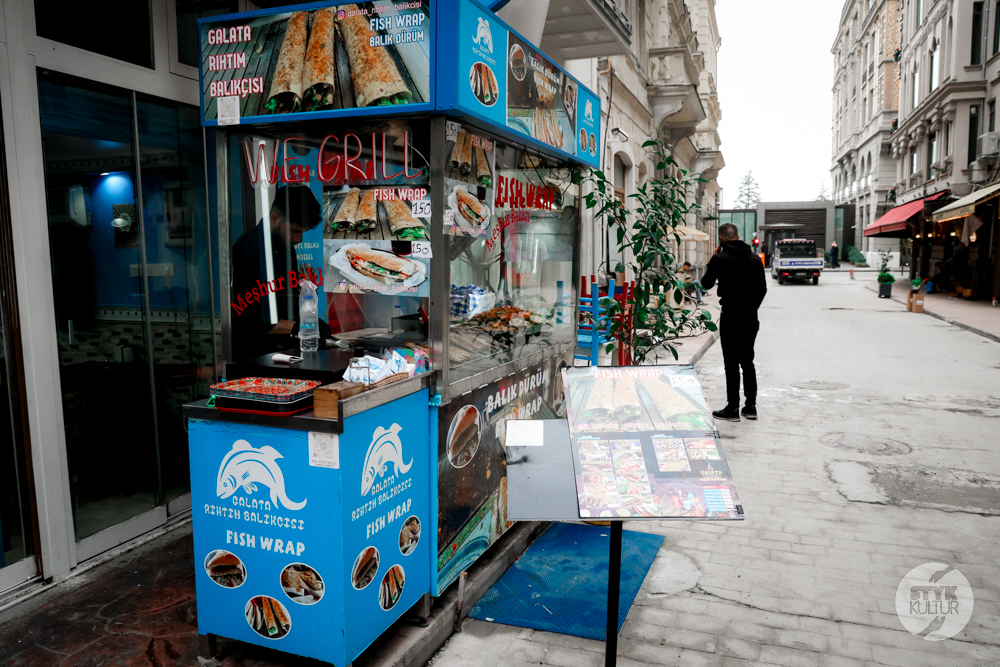
Despite extensive redevelopment, Karaköy has retained much of its historic port atmosphere. Traditional workshops and technical supply stores continue to operate alongside cafés, restaurants and contemporary cultural venues. The district is particularly well known for its seafood restaurants, traditional Turkish pastries and classic desserts.
Against this lively backdrop, Makbul Ibrahim Pasha Mosque remains remarkably understated. It attracts far fewer visitors than Istanbul’s grand imperial mosques, allowing it to preserve a sense of tranquillity and authenticity. For those interested in Ottoman history beyond the city’s most famous landmarks, it offers a compelling glimpse into the complex relationship between architecture, politics and memory.


