


Taksim Square (Taksim Meydanı) is one of Istanbul’s most recognizable landmarks and one of the most symbolic public spaces in modern Turkey. Located in the Beyoğlu district on the European side of the city, it serves as a major transportation hub, a cultural center, and a place of considerable historical and social significance.

For many visitors, Taksim is simply the starting point for a walk along İstiklal Avenue (İstiklal Caddesi). However, the history of the square extends much further back. Over the past three centuries, this area has evolved from an Ottoman water distribution facility into military barracks, a football stadium, and finally the public square that has become one of the defining symbols of the Republic of Turkey.
Where Does the Name “Taksim” Come From?
The name Taksim comes from an Arabic word meaning “division” or “distribution.” It refers to the role the site played during the eighteenth century.
Between 1732 and 1733, during the reign of Sultan Mahmud I, a stone water distribution building known as the Taksim Maksemi was constructed here. It regulated the distribution of water brought from the Belgrad Forest to districts including Galata and Beyoğlu.
The Ottoman water supply system consisted of an extensive network of aqueducts, reservoirs, and distribution points. The maksem at Taksim functioned as a control station where water was allocated to different parts of Istanbul. The historic building still stands beside the square today and remains one of the oldest surviving structures in this part of the city.

From Military Barracks to a Public Square
During the Ottoman period, Taksim was not yet a public square as we know it today. Instead, it was an open area on the outskirts of the city.
In the late eighteenth century, the Taksim Artillery Barracks (Topçu Kışlası) were built here. This vast military complex dominated the surrounding landscape and later played an important role in the political events of the early twentieth century.
In 1909, during the 31 March Incident, an uprising against the Young Turk reforms, the barracks became one of the principal strongholds of the conservative forces. After the rebellion was suppressed, the building suffered extensive damage.
In the following years, its courtyard took on an unexpected new role. It became one of Istanbul’s first football stadiums, hosting sporting events and football matches.
The barracks were ultimately demolished during the 1940s, and Gezi Park was created on the site as part of the modern urban development plan designed by the French architect Henri Prost.

The Republic Monument: A Symbol of Modern Turkey
Taksim acquired its present identity as a civic square in 1928, when the Republic Monument (Cumhuriyet Anıtı) was unveiled at its center.
The monument was designed by the Italian sculptor Pietro Canonica and financed through public donations. Standing approximately 11 meters (36 feet) tall, it is made of bronze and marble.
The monument presents two symbolic moments in Turkish history.
One side depicts Mustafa Kemal Atatürk as the military commander who led the Turkish War of Independence, while the other portrays him in civilian dress, symbolizing the establishment of the Republic of Turkey.
Among the figures represented are İsmet İnönü and Fevzi Çakmak, together with two Soviet generals—Mikhail Frunzeand Kliment Voroshilov. Their inclusion reflects Soviet military support for the Turkish National Movement during the War of Independence.
Today, the monument remains the focal point of Taksim Square and serves as the setting for official state ceremonies and commemorative events.

Major Landmarks Around Taksim Square
The buildings surrounding Taksim Square reflect different periods of Istanbul’s history and its continuing evolution.
Atatürk Cultural Center (AKM)
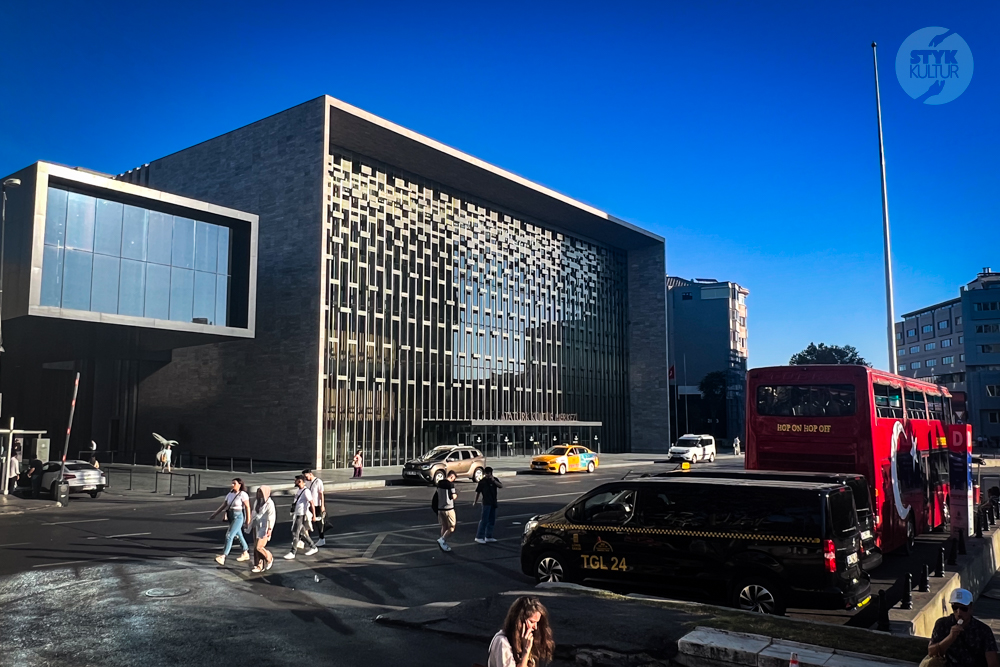
One of the square’s most prominent landmarks is the Atatürk Cultural Center (AKM). The original building opened in 1969 and quickly became one of Turkey’s leading venues for opera, ballet, theater, and the performing arts.
After years of debate and the closure of the original structure, it was demolished in 2018. A completely new cultural complex opened in 2021, featuring a contemporary architectural design.
Today, AKM houses a major opera hall, theaters, art galleries, a library, exhibition spaces, and cultural venues, making it one of Istanbul’s leading arts institutions.
Taksim Mosque
Another landmark that has significantly reshaped the skyline of the square is Taksim Mosque (Taksim Camii), which opened in 2021.
Plans to build a mosque on Taksim Square had been discussed in Turkish public life since the 1960s, although legal and planning disputes delayed the project for decades. Construction was finally approved in 2017.
The mosque can accommodate approximately 4,000 worshippers and was designed to complement the scale of the surrounding buildings. The complex also includes exhibition areas, a library, and community spaces.

Aya Triada Greek Orthodox Church
Just off the square stands the Aya Triada Greek Orthodox Church, one of Istanbul’s most significant Orthodox churches.
Completed in 1887, it is distinguished by its elegant domes and Neo-Baroque architectural features. The church serves as an important reminder of Beyoğlu’s multicultural heritage.

Gezi Park
Located directly behind Taksim Square, Gezi Park is one of the few substantial green spaces in central Beyoğlu.
Established in 1940 following the demolition of the former artillery barracks, the park has become historically significant not only as a public park but also because of major political events that took place there during the twenty-first century.
The Historic Tram and İstiklal Avenue
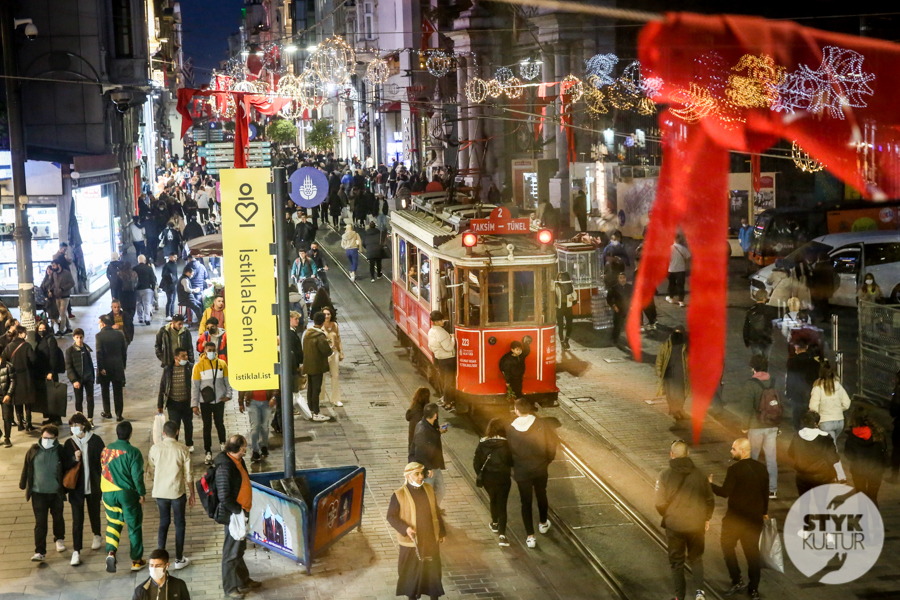
Taksim Square marks the beginning of İstiklal Avenue, one of Istanbul’s most famous streets.
Running along this historic boulevard is the iconic red heritage tram, which connects Taksim with Tünel Square near Galata. Riding the tram has become one of the city’s most recognizable experiences for visitors.
Recent Urban Transformation
Over the past few decades, Taksim has undergone several major urban redevelopment projects.
One of the most significant took place between 2012 and 2013, when vehicle traffic surrounding the square was redirected into underground tunnels, allowing much of the surface to become pedestrian-friendly.
In 2020, the Istanbul Metropolitan Municipality organized an international design competition to reimagine the future of Taksim Square. The winning proposal was selected through a public vote, making it one of the largest participatory urban planning initiatives in the city’s history.

Taksim Square as the Heart of Modern Istanbul
Taksim is more than a tourist attraction—it functions as one of Istanbul’s principal meeting places.
When locals say, “Let’s meet at the monument,” they almost always mean the Republic Monument at the center of Taksim Square.
The surrounding area remains lively throughout the day and late into the evening. Within a short walk, visitors will find:
- hotels and restaurants
- cafés, bars, and nightlife
- shopping streets and retail centers
- theaters, galleries, and concert venues
With direct connections to the M2 Metro, buses, the F1 funicular, and the heritage tram, Taksim remains one of Istanbul’s most important transportation hubs.


Why Visit Taksim Square?
Although Taksim may not be Istanbul’s most architecturally impressive square, its importance lies in the role it plays within the city’s history and daily life.
Here, visitors encounter:
- the legacy of the Ottoman Empire
- the symbols of the Republic of Turkey
- contemporary urban culture
- one of Istanbul’s busiest entertainment and shopping districts
A walk through Taksim Square is often the beginning of exploring Beyoğlu. More than many of Istanbul’s historic monuments, it offers insight into the city’s modern identity and the layers of history that continue to shape it.

FAQ About Taksim Square
Where is Taksim Square?
Taksim Square is located in Beyoğlu on the European side of Istanbul. It is one of the city’s main transportation hubs and marks the northern end of İstiklal Avenue.
Why is it called Taksim?
The name means “division” or “distribution” and refers to the eighteenth-century water distribution station (maksem) that once supplied different parts of Istanbul.
Is Taksim Square safe for tourists?
Yes. Taksim is one of Istanbul’s busiest and most frequently visited areas. However, visitors should be aware that the square may occasionally be closed during demonstrations or major public events.

How do you get to Taksim Square?
The easiest way to reach Taksim is by taking the M2 Metro, which has a station directly beneath the square. Numerous bus routes and the F1 funicular also connect Taksim with other parts of the city.
What are the main attractions around Taksim Square?
Highlights include the Republic Monument, Atatürk Cultural Center (AKM), Taksim Mosque, Aya Triada Greek Orthodox Church, Gezi Park, and the beginning of İstiklal Avenue.
Is Taksim Square worth visiting?
Absolutely. Even though it is not a traditional historic monument, Taksim is one of Istanbul’s most important public spaces and an excellent starting point for exploring Beyoğlu while experiencing the atmosphere of modern Istanbul.


