In 2026, The Museum of Innocence returned to the global cultural spotlight with Netflix’s television adaptation. Yet the story behind the series is far richer than the screen version alone. It encompasses a Nobel Prize-winning novel, a real museum in Istanbul, and a city that became an essential part of the narrative itself. To understand the scale of this extraordinary project, it is worth beginning with its creator.

Who Is Orhan Pamuk, and Why Was The Museum of Innocence Such a Unique Project?
The novel was written by Orhan Pamuk, the Turkish novelist born in Istanbul in 1952 and awarded the 2006 Nobel Prize in Literature. His work explores the tensions between East and West, memory, identity, and the social transformation of modern Turkey. Earlier novels such as My Name Is Red and The Black Book established his reputation as a writer who combines intellectually ambitious fiction with an intimate portrayal of Istanbul.
Published in 2008, The Museum of Innocence (Masumiyet Müzesi) was conceived as more than a novel from the very beginning. While writing it, Pamuk was simultaneously planning a real museum that would physically embody the lives of his fictional characters. Literature, in his vision, would extend beyond the pages of a book.


The novel follows Kemal, a wealthy member of Istanbul’s upper class during the 1970s, and his younger relative Füsun. What begins as a love affair gradually develops into a lifelong obsession. Kemal starts collecting everyday objects connected with Füsun—ticket stubs, clothing, household items, and even cigarette butts—in an attempt to preserve both memory and emotion.
The novel sparked intense discussion in Turkey. Some readers admired its meticulous reconstruction of 1970s Istanbul, while others focused on the unsettling psychological nature of Kemal’s obsession. Internationally, the book further strengthened Pamuk’s reputation as a novelist capable of intertwining private lives with broader social history.



When Fiction Became Reality: The Museum of Innocence
Four years after the novel’s publication, Pamuk’s vision became reality.
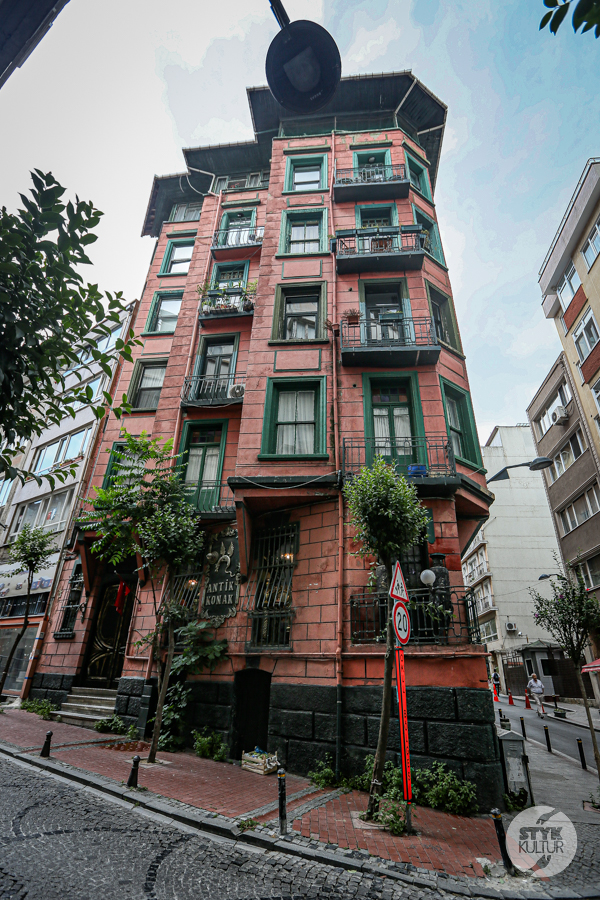
In 2012, the Museum of Innocence opened in the Çukurcuma neighborhood of Istanbul. The museum occupies a restored nineteenth-century townhouse on Çukurcuma Avenue, distinguished by its characteristic red-pink façade.
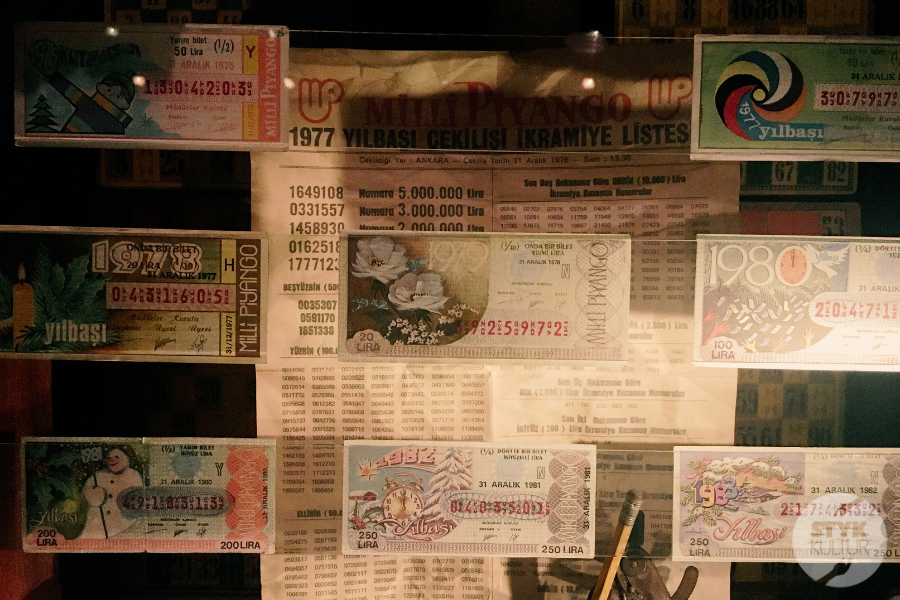
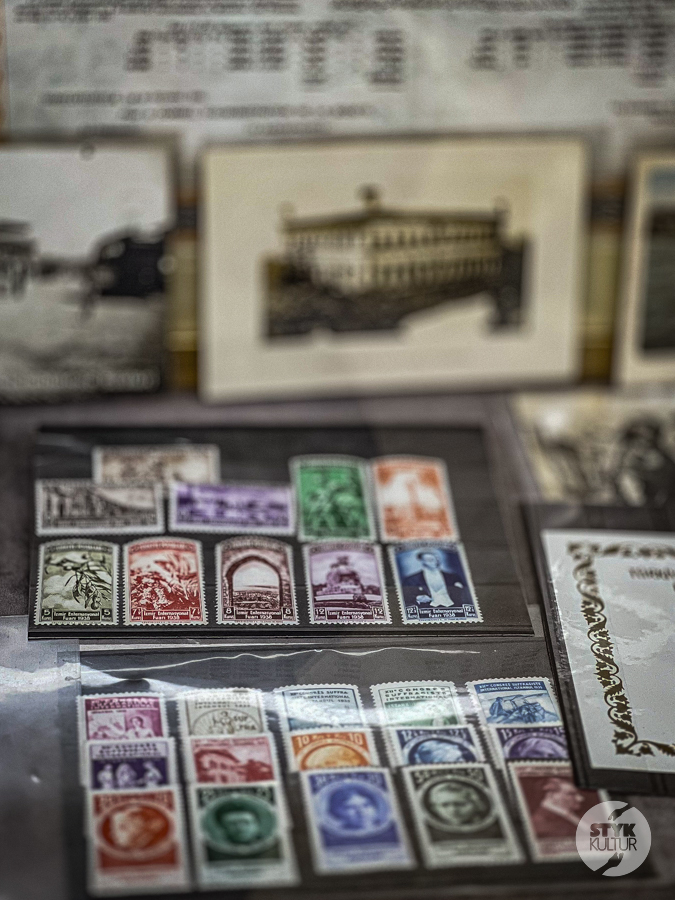
The museum mirrors the structure of the novel itself. Each of the book’s 83 chapters corresponds to a separate display case. The collection includes household objects from the 1970s, photographs, furniture, clothing, and perhaps its most famous installation—4,213 cigarette butts, each supposedly smoked by Füsun, individually dated and accompanied by handwritten notes.
The museum received the title of European Museum of the Year in 2014.
Pamuk also published a museum manifesto arguing that the future of museums lies not in grand national narratives but in intimate institutions dedicated to telling individual human stories.
Walking through today’s Çukurcuma reveals how deeply the novel has become embedded in Istanbul’s urban landscape. Many locations described in the book still exist, although others have changed with time. In this sense, the museum has also become an archive preserving the memory of an older Istanbul.


The Geography of the Novel: Nişantaşı, Teşvikiye, and the City as a Character
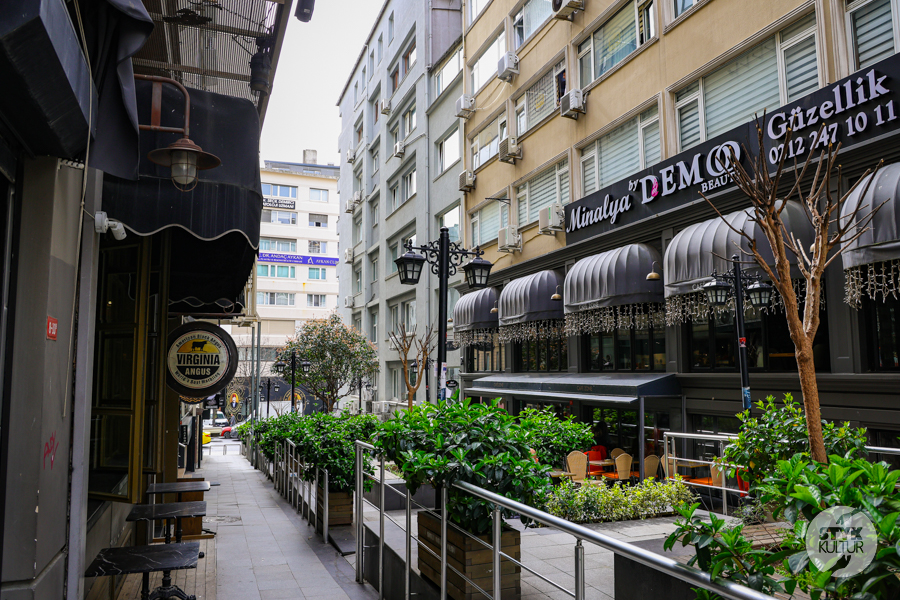
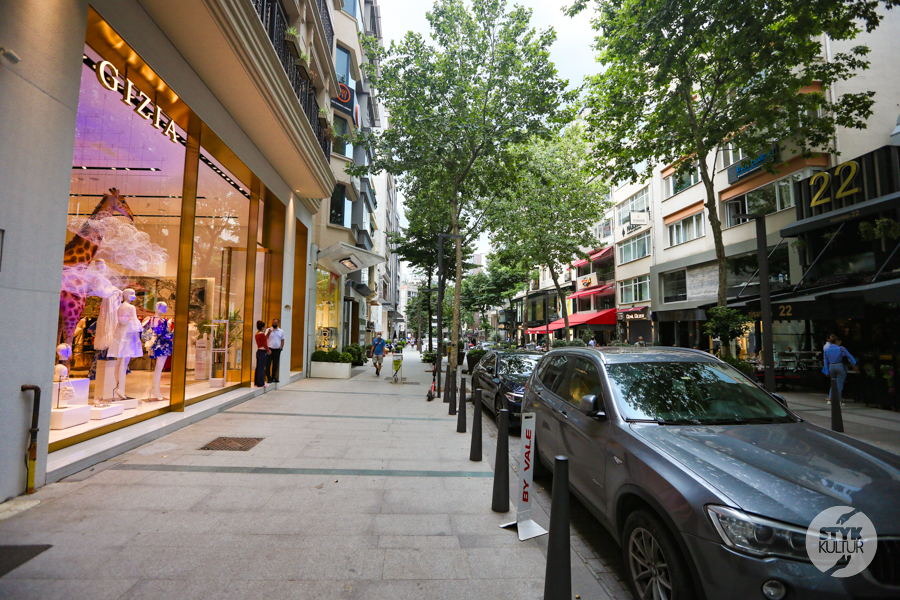
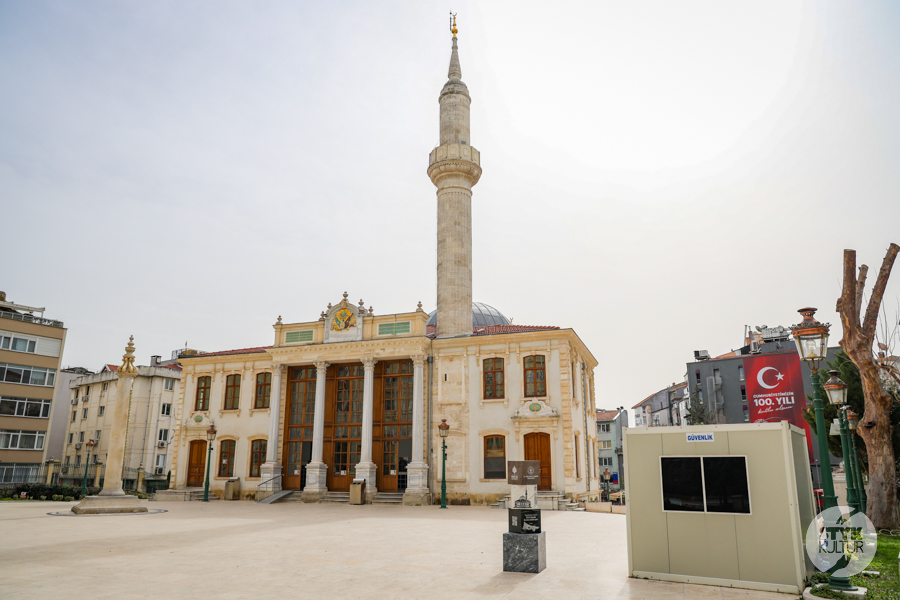
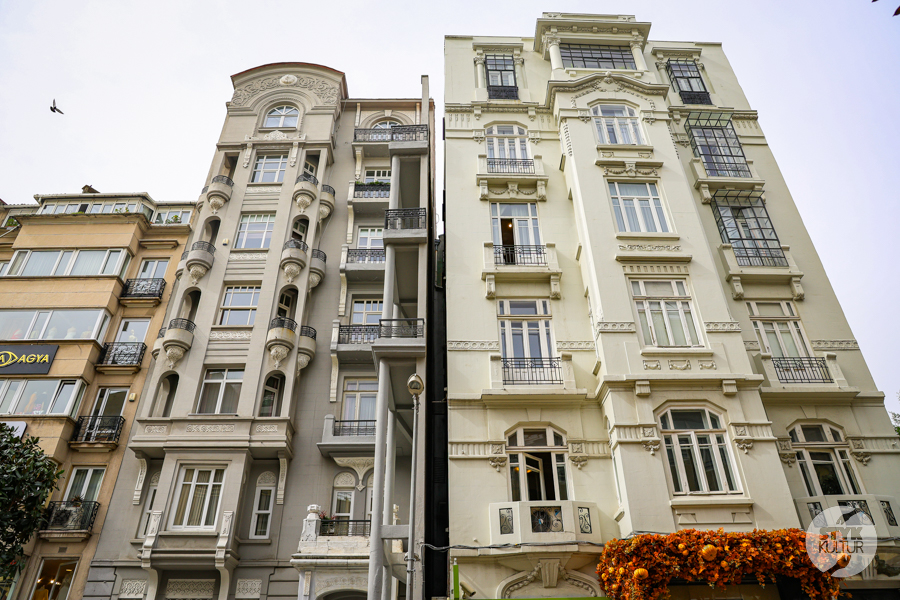
The novel—and the Netflix adaptation—also unfold in Nişantaşı and Teşvikiye, neighborhoods that represented Istanbul’s affluent, Western-oriented elite during the 1970s.
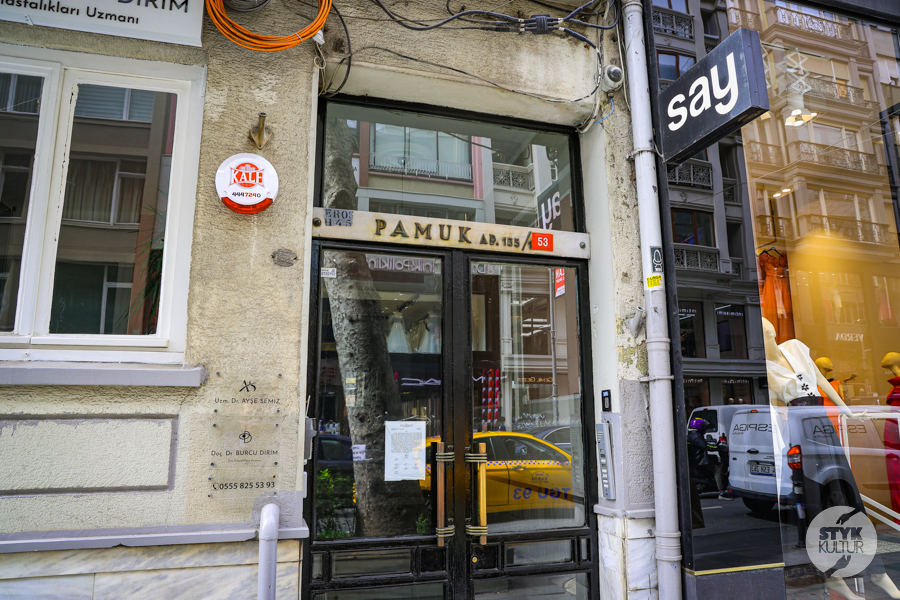
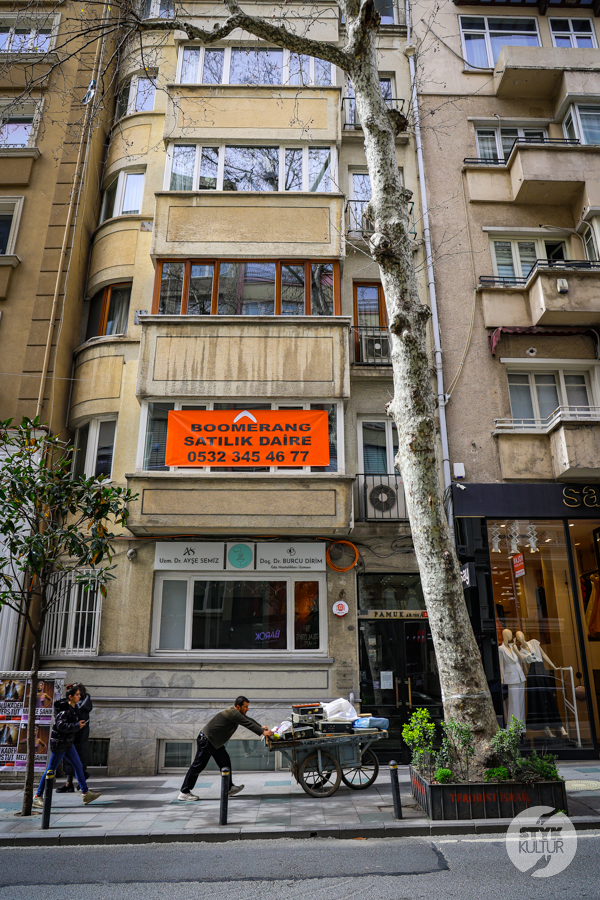
On Valikonağı Street, Pamuk places the fictional Merhamet Apartment, where Kemal and Füsun secretly meet. The building itself does not exist, but on Pamuk’s own maps it stands beside the real Pamuk Apartment, where the author grew up. This deliberate interplay between fiction and reality is central to the project.
Other locations include Şanzelize Boutique, where Füsun works, the historic Hilton Istanbul, the first Hilton hotel built outside the United States and a symbol of Turkey’s postwar modernization, the former police station in Harbiye, known locally as Süslü Karakol, and Alaaddin’s Shop, familiar to readers of The Black Book. The original store, which had operated since the 1950s, closed in 2024, becoming a symbolic reminder of the gradual disappearance of old Istanbul.
The 2026 Netflix Series: An Adaptation Closely Supervised by Orhan Pamuk
I first learned about the television adaptation of The Museum of Innocence in 2024, during Orhan Pamuk’s visit to Poznań for the Malta Festival.
On 7 September, I attended the premiere of the opera I, Şeküre, inspired by My Name Is Red, where Pamuk was the festival’s honorary guest. The following day, during a public conversation at the University of the Arts in Poznań, he spoke about his creative process and the challenges of adapting literature for film and television. It was there that he confirmed Netflix was developing a series based on The Museum of Innocence.
Pamuk explained that preparations had lasted two years and that the screenplay had presented the greatest challenge.
“When I received the first draft of the adaptation, I decided I would only sign the contract if the final screenplay attached to it had my complete approval.”
He explained that screenwriter Ertan Kurtulan worked deliberately, which ultimately extended the writing process to approximately eighteen months.
“I didn’t intend to interfere with the choice of director or cast, but I wanted to have a say in the screenplay.”
Throughout the discussion, Pamuk answered questions with characteristic wit while making it clear that he was unwilling to compromise on the literary foundations of the project.

The Cast and Interpretation of the Main Characters
Netflix produced The Museum of Innocence as a nine-episode psychological drama, directed by Zeynep Günay Tan.
From the outset, the production was conceived as an intimate portrait of Istanbul during the 1970s, with particular emphasis on class divisions and changing social conventions.
The principal cast includes:
- Selahattin Paşalı as Kemal
- Eylül Lize Kandemir as Füsun
- Oya Unustası as Sibel
Paşalı portrays Kemal as a man torn between social expectations and growing emotional obsession. His performance relies on restraint and psychological tension rather than melodrama.
Kandemir presents Füsun not merely as an object of desire but as a young woman negotiating class barriers while attempting to preserve her independence.

Unustası’s portrayal of Sibel provides an effective counterbalance. Representing the privileged cosmopolitan world of Nişantaşı, Sibel becomes more than a secondary character—she embodies the social stability and modern identity against which Kemal’s obsession unfolds.
The casting reflects a deliberate decision to work with actors whose public personas would not overshadow the story itself, allowing the emotional relationship and the city to remain at the center of the narrative.
Although the series remains faithful to the novel’s central storyline, it expands the social context of 1970s Istanbul. Many scenes were filmed in authentic locations including Çukurcuma, Nişantaşı, and Harbiye, while detailed period production design reinforces one of the novel’s central ideas: memory survives not only through stories but also through places and everyday objects.
How Was The Museum of Innocence Received in Turkey?
The reception of The Museum of Innocence in Turkey has always reflected both local experience and generational differences.
For many older readers, the novel became an intimate portrait of 1970s Istanbul and an archive of neighborhoods such as Nişantaşı, Teşvikiye, and Harbiye before the city’s later transformation.
At the same time, both the novel and the Museum of Innocence generated debate about gender, class, and social expectations. Kemal and Füsun’s relationship was interpreted not simply as a love story but as an exploration of class inequality and male obsession.
The Netflix adaptation has introduced the story to a new generation.
Many younger viewers, who may previously have associated Pamuk primarily with political controversies surrounding his public statements, now approach the story through psychological and cultural themes instead. The series has brought the novel into mainstream international culture while raising an interesting question: can such an intimate literary work retain its unique character within the format of a global streaming production?


Is The Museum of Innocence Based on a True Story?
This is one of the questions most frequently asked by both readers and museum visitors.
The answer requires distinguishing between literary fiction and physical reality.
Kemal and Füsun are fictional characters. Pamuk deliberately created what he calls a fictional universe. Some addresses—such as Merhamet Apartment—exist only within the novel, carefully inserted into Istanbul’s real geography.
Yet the physical objects displayed in the Museum of Innocence are entirely real.
Pamuk began collecting them during the mid-1990s, long before completing the novel. Many of these objects inspired scenes that later appeared in the book. Even the famous installation of 4,213 cigarette butts consists of genuine objects, although within the narrative they belong to the fictional character Füsun.
This duality—a real object placed within a fictional context—is what makes the project so extraordinary.
Likewise, the novel unfolds in genuine neighborhoods including Nişantaşı, Çukurcuma, and Harbiye, while referencing real landmarks such as the Hilton Istanbul and the former Harbiye police station. The geography is authentic, the historical background accurate, and the social details carefully researched, creating the impression that the story itself might also be true.
The Museum of Innocence occupies a unique place in world literature because a fictional novel ultimately gave birth to a real museum.
The story itself never happened—but it has been constructed so convincingly that many visitors continue to wonder whether it actually did.

Following The Museum of Innocence Through Istanbul
If this is your first visit to Istanbul, the route inspired by The Museum of Innocence is best explored at a relaxed pace.
Rather than focusing on iconic landmarks such as Hagia Sophia or Topkapı Palace, this itinerary invites you to discover neighborhoods that shaped Pamuk’s fictional world.
Begin at the Museum of Innocence in Çukurcuma, allowing around one to one and a half hours for your visit. The museum is easily reached by taking the T1 tram to Tophane or Kabataş, or the metro to Şişhane, followed by a short uphill walk.
Spend time wandering through Çukurcuma itself, one of Beyoğlu’s most atmospheric districts, known for its antique shops, galleries, and narrow streets that still preserve the character of old Istanbul.

From there, continue to Nişantaşı, either by taxi or public transport. Walking along Valikonağı Street allows you to imagine the setting of the fictional Merhamet Apartment while experiencing one of Istanbul’s most elegant neighborhoods. Nearby, the historic Hilton Istanbul remains an important symbol of Turkey’s modernization during the mid-twentieth century.
A short distance away lies Harbiye, another important setting in the novel. Even if some locations are no longer accessible or have changed over time, the district provides valuable context for understanding how Pamuk anchors private lives within the broader social fabric of Istanbul.
Not every address mentioned in the novel exists exactly as described. This ambiguity is intentional and forms part of Pamuk’s literary design.
Walking through Istanbul in the footsteps of The Museum of Innocence is not about checking off landmarks. It is about learning to read the city itself. Taken slowly, the route reveals Istanbul layer by layer—just as the novel does.